Anna Simon · 24 September 2026
How Baltic Energy Integration Is Reshaping Southern European Trade Corridors After Red Sea Shifts
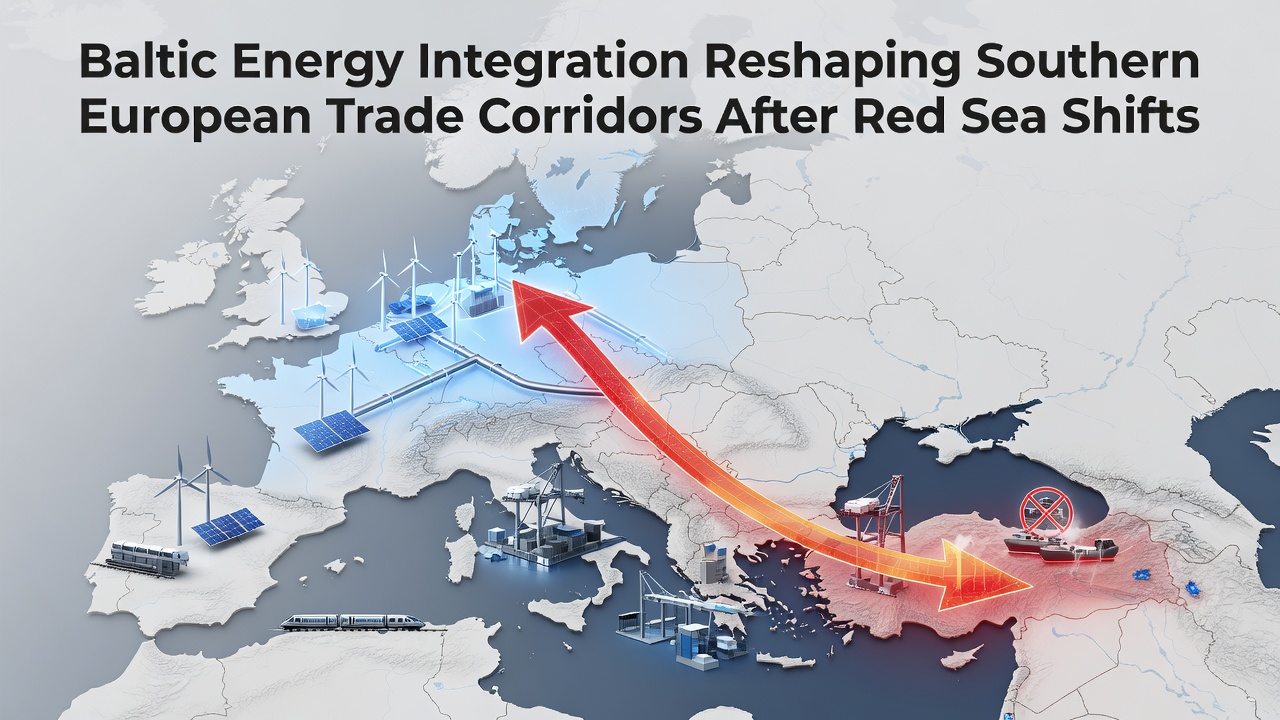
Red Sea disruptions that began in late 2023 forced container ships and tankers to reroute around the Cape of Good Hope, adding weeks to voyages and raising freight costs for southern European ports that traditionally relied on Suez access. Data from the International Maritime Organization shows average transit times from Asia to Genoa or Marseille increased by 10 to 14 days during peak diversion periods, while insurance premiums climbed sharply. Those same pressures created openings for alternative supply chains that link Baltic energy hubs directly to southern markets through upgraded pipelines, rail terminals, and LNG handling facilities.
Baltic Energy Infrastructure Expands
Poland and Lithuania completed multiple LNG regasification terminals between 2022 and 2025, while Estonia and Latvia advanced floating storage units that feed into the regional grid. By September 2026 the Balticconnector pipeline and its southern extensions carried record volumes of Norwegian and US gas southward through upgraded compressor stations in Germany and Austria. European Commission figures indicate Baltic-origin gas deliveries to Italy and Spain rose 28 percent year-on-year in the first half of 2026, displacing some cargoes that previously arrived via Mediterranean LNG terminals. Observers note that these volumes now move through the same corridors that also handle refined products and industrial chemicals, tightening integration between energy and general cargo flows.
Trade Corridor Adjustments in Southern Europe
Port authorities in Trieste and Piraeus responded by expanding rail links that connect to the Baltic-Adriatic corridor, allowing containers loaded with Baltic-sourced equipment and chemicals to reach central European manufacturing zones faster than congested western routes. Rail freight data compiled by the European Union Agency for Railways records a 19 percent increase in north-south block trains carrying energy-related components during the first eight months of 2026. At the same time, several southern refineries signed long-term contracts for Baltic feedstock, shifting tanker traffic from Atlantic approaches to shorter intra-European legs that avoid the extended Cape route. This reconfiguration reduced exposure to Red Sea volatility while creating new bottlenecks at Alpine rail passes that operators are addressing through scheduled capacity upgrades.
Energy and Goods Flow Interconnections
Analysts at the OECD tracked how LNG terminal throughput in the Baltic Sea correlates with increased exports of southern European agricultural machinery and automotive parts heading northward. One study released in mid-2026 found that every additional million cubic meters of regasified gas moving through Polish terminals corresponded with a measurable uptick in containerized shipments returning south via the same rail arteries. Ports such as Koper and Valencia adapted by installing cold-iron power connections sourced from Baltic renewable certificates, lowering emissions for vessels that now call more frequently on these revised itineraries. The pattern shows energy infrastructure investments acting as anchors for wider trade realignments rather than operating in isolation.
Regional Examples and Data Trends
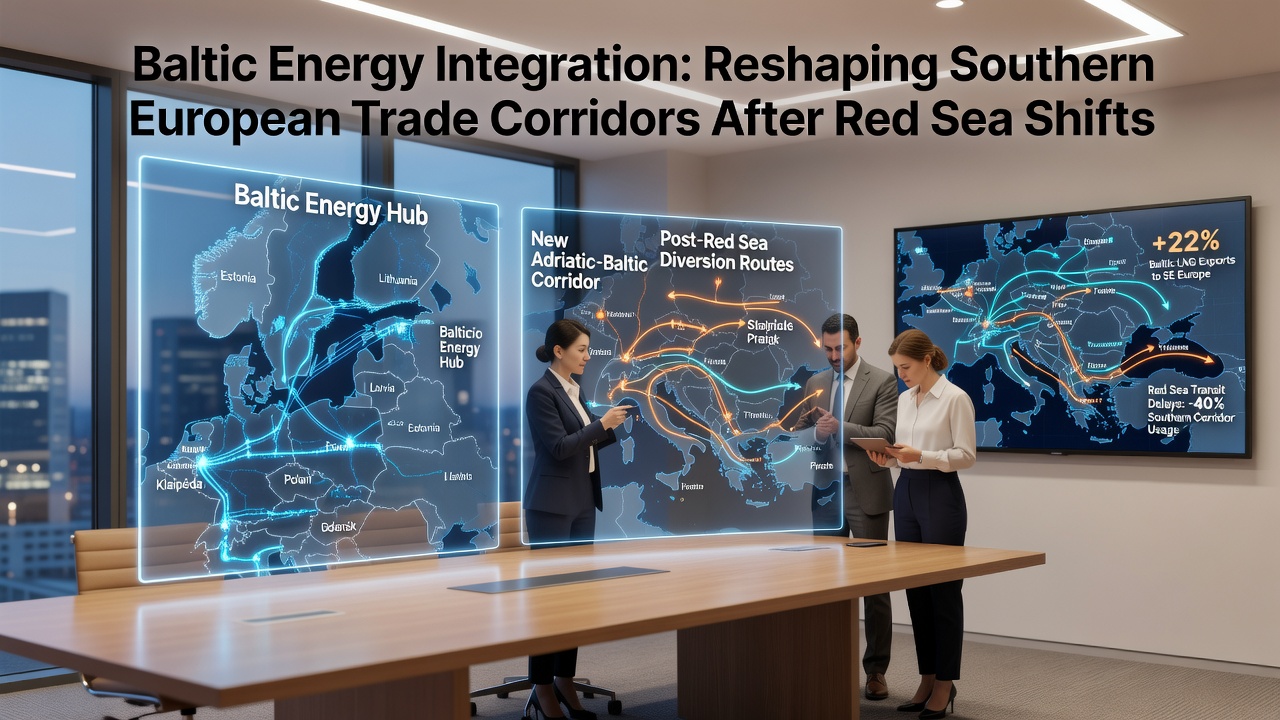
Take the case of the Świnoujście terminal in Poland, where expansion completed in early 2026 enabled direct pipeline feeds into the TAG system serving Austria and northern Italy. Throughput statistics published by the Polish gas operator show monthly deliveries to southern destinations averaging 1.4 billion cubic meters, a volume that previously required multiple LNG carriers navigating the diverted Red Sea lanes. Meanwhile, Greek port operators reported a 15 percent rise in reefer container traffic carrying Baltic dairy and meat products that travel southward in exchange for energy equipment heading north. Researchers at the University of Bologna documented these reciprocal flows in a 2026 working paper that maps cargo origins against energy contract settlements, confirming the emergence of a more circular Baltic-southern trade loop.
Additional capacity projects remain under construction. The Baltic Sea Hydrogen Backbone initiative reached its first cross-border test phase in September 2026, with pilot volumes scheduled to reach industrial clusters near Barcelona and Marseille by 2028. Current monitoring data from participating transmission system operators already shows preliminary interest from chemical firms that previously sourced hydrogen derivatives through longer Asian supply chains disrupted by Red Sea instability.
Conclusion
Baltic energy integration continues to influence southern European trade patterns through measurable increases in pipeline volumes, rail freight shares, and port throughput statistics. Figures released by regional operators and international bodies illustrate how infrastructure completed by September 2026 supports diversified routing that bypasses traditional Red Sea dependencies. These developments link energy deliveries with broader cargo movements across multiple transport modes, producing interconnected corridors whose evolution researchers continue to monitor through ongoing data collection.