
Wendy Schmidt · 5 November 2026
How Revised Eurozone Price Data Is Reshaping Funding Flows for Baltic Renewable Grid Projects and Italian Heritage Maintenance
Revised Eurozone price data released in late 2026 has triggered adjustments across multiple funding mechanisms that support cross-border infrastructure initiatives, and observers note how these shifts are altering capital allocation patterns for energy grids in the Baltic region alongside preservation work at historic Italian locations. Data from national statistical agencies showed downward revisions to harmonised index of consumer prices figures for the third quarter, which in turn prompted the European Central Bank to signal potential rate path modifications through its November 2026 communications. Those revisions reduced projected inflation averages by 0.4 percentage points compared with earlier estimates, and analysts at several member state central banks have since recalibrated models used to price long-term project bonds.
Baltic Renewable Grid Financing Adjustments
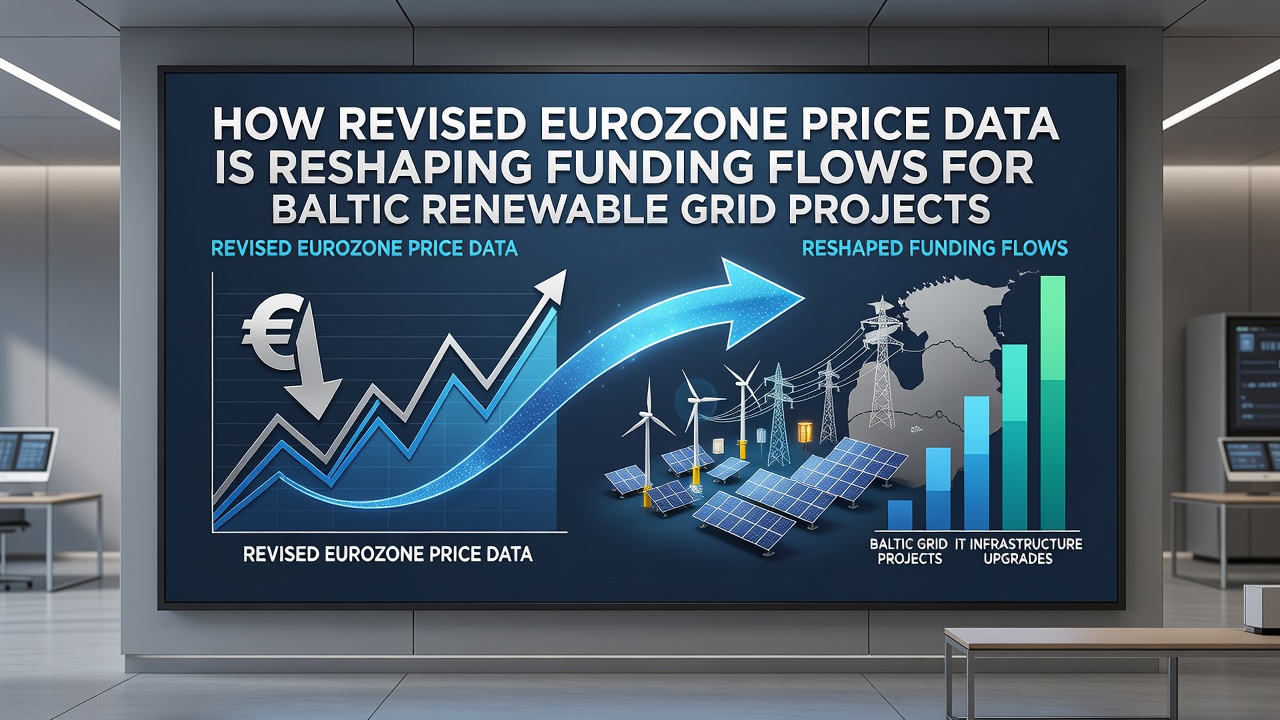
Baltic states have pursued interconnection upgrades that link offshore wind capacity in the Gulf of Riga with mainland transmission networks in Poland and Germany, yet the revised price metrics altered the cost assumptions embedded in European Investment Bank lending frameworks. Lower inflation expectations translated into tighter spreads on green bonds issued to finance subsea cable projects, and several consortia reported that debt service projections now incorporate a 12 basis point reduction in benchmark yields. Research from the International Energy Agency indicates that such adjustments can accelerate drawdown schedules for projects already under construction, because lower nominal costs reduce the overall subsidy requirements from national recovery funds.
Funding flows from the Connecting Europe Facility have also seen reallocation reviews, and authorities in Estonia and Latvia confirmed that grant agreements signed before the price revisions now carry updated co-financing ratios. One study released by the OECD in October 2026 examined how inflation data revisions affect renewable project viability across northern Europe, and its findings showed that a 0.3 percentage point decline in expected price growth can improve internal rates of return by up to 1.8 percent for high-capital-intensity grid assets. Those calculations rely on updated discount rates applied to multi-decade cash flow models that incorporate both electricity market revenues and capacity payments.
Italian Heritage Site Funding Realignments
Italian authorities managing restoration budgets for sites such as the Forum Romanum and the Palazzo Ducale in Venice have begun incorporating the same revised price series into their multi-year expenditure plans, and ministry officials report that lower inflation assumptions have freed marginal resources within fixed EU cohesion allocations. The Ministry of Culture confirmed in November 2026 that tender documents for masonry stabilisation and climate control installations now reflect reduced material cost escalators, which allows additional phases of work to be included without exceeding original envelope limits. Data released by the Italian National Institute of Statistics showed that construction input prices for heritage-grade limestone and specialised mortars rose less than previously modelled, creating headroom within the 2027-2031 funding cycle.
European structural funds directed toward cultural infrastructure have historically operated under inflation-indexed disbursement rules, yet the November revisions prompted the European Commission to issue guidance allowing member states to front-load certain commitments. Observers tracking these developments note that Italian regions with high concentrations of UNESCO-listed properties stand to benefit from earlier access to tranches previously held in reserve for contingency inflation. Academic papers from the University of Bologna's economics department have quantified how such timing shifts influence contractor bidding behaviour, and the research demonstrates that predictable cash flows encourage greater participation from specialised restoration firms that otherwise face liquidity constraints.
Interconnections Between Energy and Cultural Funding Streams
Although Baltic grid projects and Italian heritage maintenance operate under separate regulatory umbrellas, both rely on instruments sensitive to Eurozone price signals, and revised data has produced parallel effects on risk premia attached to their respective financing vehicles. The European Stability Mechanism's lending criteria, for instance, reference harmonised price indices when setting terms for sovereign-backed facilities that indirectly support both categories of expenditure. When those indices move downward, borrowing costs decline across the spectrum, which in turn influences how national governments prioritise between renewable integration and cultural asset stewardship within their domestic budgets.
Market participants have observed increased correlation between green bond yields for Baltic transmission operators and inflation-linked securities used by Italian cultural foundations, and this linkage has prompted portfolio managers to adjust hedging strategies accordingly. Figures compiled by Eurostat and released in the first week of November 2026 underpin these market movements, because they provide the common reference point that pricing models across both sectors now incorporate. Those who monitor EU budget execution report that the combined effect has produced modest but measurable acceleration in commitment rates for both renewable and heritage line items during the final quarter of the year.
Conclusion
Revised Eurozone price data continues to propagate through funding mechanisms that support Baltic renewable grid development and Italian heritage maintenance, and the adjustments observed through November 2026 illustrate how macroeconomic revisions translate into concrete changes in project economics. Updated inflation assumptions have influenced bond pricing, grant ratios, and disbursement timing across both domains, while maintaining the underlying policy objectives established under EU multi-annual frameworks. Continued monitoring of subsequent statistical releases will determine whether these patterns persist into 2027.